Burnsville Wood Flooring has worked on wood flooring in Savage for more than twenty years, and the job that comes up most often in this city is not a new installation. It is a first full sand-and-refinish on a site-finished oak floor that went down when the house was built in the 1990s.
That is a narrower problem than it sounds, and there is a real decision inside it. A floor that has never been sanded is almost always thick enough to sand; whether it should be sanded now, screened and recoated instead, or repaired in places first depends on what a moisture meter, a straightedge and a close look at the finish turn up.
So we measure before we price anything. Indoor relative humidity is read and written down on the first visit, the remaining wear layer is checked rather than assumed on any engineered floor, and the grit sequence and finish schedule we plan to run are handed over in writing alongside the quote. A homeowner should be able to hold the finished job up against a document.
A city that built most of its housing after 1980
The shape of the housing stock here explains most of what we find behind a front door. The 1990s are the largest single build decade in Savage at 29.8 percent of 12,207 housing units, and another 39.7 percent of the stock went up in 2000 or later. Just 11.9 percent of units predate 1980.
That leaves a large and fairly uniform cohort of houses now somewhere in their late twenties and thirties, and 85.8 percent of the city’s 12,021 occupied units are owner-occupied. Those are the households that hold a floor long enough for it to reach a first refinish rather than handing the decision to somebody else.
Why a whole decade of floors comes due at once
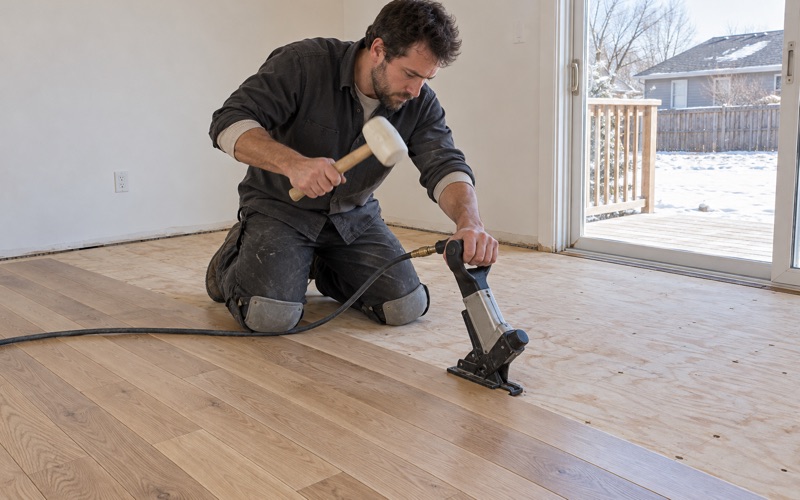
Builders working through a run of subdivisions tend to specify much the same package: three-quarter-inch solid red oak or white oak, nailed down over a plywood or OSB subfloor, then sanded and finished in place, usually under oil-modified polyurethane. Floors laid that way in the same few years wear through at broadly the same rate.
That predictability is useful to us. Walking into a 1990s house here, we can reasonably expect the species, the fastener pattern and the finish type, which leaves the visit free for the things that genuinely vary: subfloor movement, past water events, and how much wood is still sitting above the tongue.
The newer half of the city is a different conversation
Homes built in 2000 or later more often carry prefinished or engineered flooring. On engineered construction we measure the wear layer before quoting a refinish at all, because below a certain thickness there is nothing left to sand and a drum sander will cut through the veneer into the core. A screen-and-recoat is often still available on those floors when a full refinish is not.
Looking for wood-flooring closer to Bloomington? See Bloomington Wood-Flooring.
Where a thirty-year-old site-finished floor actually stands
Owners usually assume a floor of this age is nearly used up. Solid strip that has never been sanded generally holds enough material above the tongue for more than one full pass, so the constraint is rarely the wood itself. The real question is timing, and whether something lighter would buy the same result this year.
Reading the finish before the wood
Traffic lanes that have gone flat and slightly gray while the edges of the room still hold a sheen mean the polyurethane is thinning but has not been walked through. Once the finish is broken and bare wood is taking in dirt and spills, the decision has already been made, because that wood will not come clean without sanding.
Then we look at the boards themselves: cupping across the width of the strips, crowning where a cupped floor was once sanded flat before it had dried out, overwood at the joints, and the fine lathe checks that show in some older material. Every observation gets paired with a moisture content reading and a hygrometer reading of the room, because a moisture figure means very little without the conditions that produced it.
Winter gapping, measured before it is called a defect
From December into March the air inside a heated house here runs dry, the boards give up moisture, and thin gaps open along the seams. A good share of them close again by June. We measure the gaps and explain them rather than letting a floor be condemned for doing what wood does.
Where the swing is wide enough to bring on dry cupping, the fix is the air rather than the abrasive. Holding the house nearer the thirty to fifty percent relative humidity band, usually with a whole-house humidifier on a forced-air system, changes how the floor behaves in a way that refinishing it never will.
When a screen-and-recoat is honestly the better buy
If the finish is worn but unbroken and the boards are flat, an abrasive screen and a fresh coat costs less, takes a fraction of the days and leaves the wear layer untouched. We quote a recoat against a full sand-and-refinish and say plainly which of the two we would spend the money on, including the times that is the cheaper one.
The limits belong in the same conversation. A recoat will not lift a stain that has reached the wood, will not level overwood, will not change the color of the floor, and will not bond reliably over boards that have been treated with an oil soap or an acrylic polish. Those are the jobs where the sander comes out.
The first full sand-and-refinish, step by step
Once a floor is coming back to bare wood, the sequence matters more than the brand on the machine. That sequence is what we put in writing with the quote, so the finished job can be checked against something rather than taken on trust.
The grit sequence
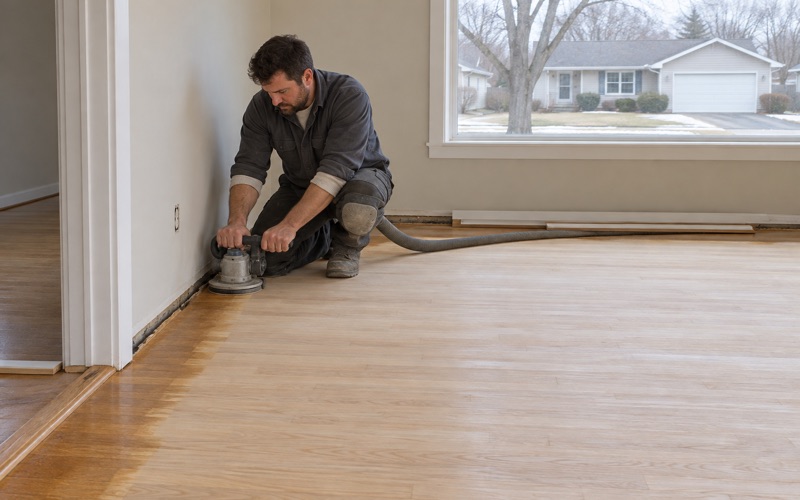
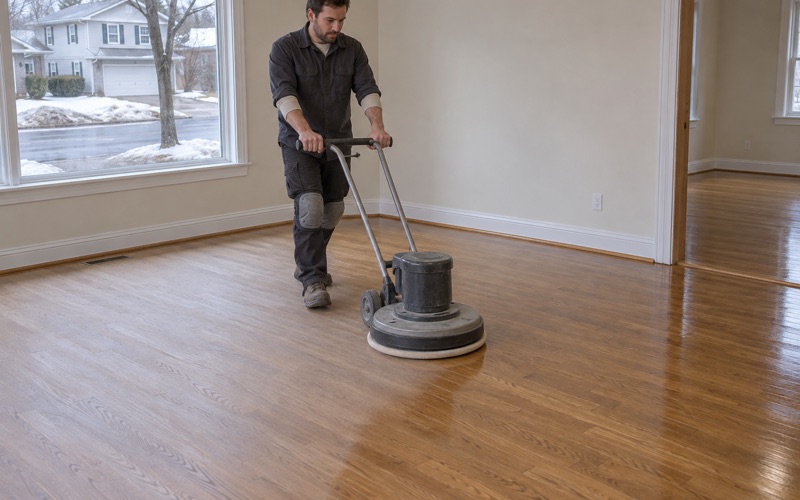
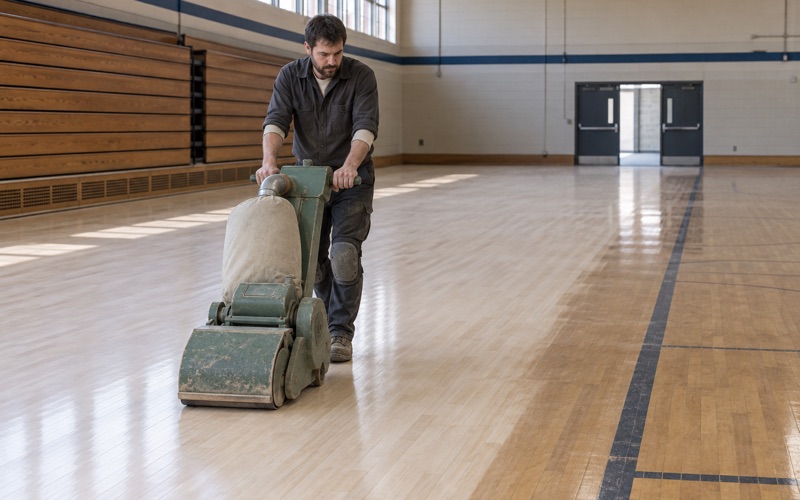
A first sanding on a 1990s oak floor commonly runs a 36-50-80 grit sequence: the drum sander through the field, an edger bringing the perimeter down to match, and a buffer carrying an abrasive screen to blend the two before any finish is applied. Starting coarse enough to take off the old polyurethane and the worn surface in one cut is what keeps the total amount of wood removed small.
Skipping steps is where the visible damage happens. Jumping from a coarse cut to a fine one leaves scratch that the finish then highlights for years, and it reads worst under a satin sheen with low winter light raking across a room. Rushed edger work at the perimeter shows up the same way, as a darker halo around the outside of every room.
Finish, and the difference between dry and cured
Waterborne polyurethane dries clear and lets the room come back into use sooner. Oil-modified polyurethane ambers as it ages and matches the tone most of these 1990s floors have carried since they were built, which matters when only part of a house is being refinished and the rest has to live next to it.
Dry time and cure time are separate numbers and we give both. A floor takes stocking feet long before it will take area rugs, pet claws or a refrigerator sliding back into position, and loading a finish that is dry but not cured is one of the more expensive mistakes available on a new surface.
The heating season, and the permit question
We sequence the work around the heating season instead of in spite of it. Sanding and finishing a floor while the house sits at January conditions means the boards are cut flat at one moisture content and then asked to live at another; where the calendar allows we move the job, and where it does not we manage the room through it and write down what we did.
Refinishing an existing floor is interior finish work, and Minnesota Rules 1300.0120 exempts work of that kind from a building permit. Anything that reaches further, such as replacing a section of subfloor or altering a stair, is a separate question that runs through the Minnesota State Building Code as administered by the City of Savage.
Dust containment runs on every sanding job, and we would rather be straight about its limits than oversell it. Containment captures the great majority of what the drum sander and the edger throw, and a fine film still finds flat surfaces in the rooms next door.
The small pre-1940 remnant, and what changes there
Not all of Savage arrived on a subdivision plat. About 1.5 percent of the housing stock predates 1940 and 4.3 percent predates 1960, which is a modest number of buildings and a different job from the 1990s cohort in nearly every respect.
The city began as a trading post at the confluence of the Credit River and the Minnesota River in 1852, was incorporated in 1892 as the village of Hamilton, and took its present name in 1904 after Marion Willis Savage, owner and trainer of the racing horse Dan Patch. The Credit River still runs up from the south through the city and empties into the Minnesota River.
Pre-1978 houses and lead-safe work
A floor from the 1990s sits well clear of the EPA RRP lead-safe rule. A house built before 1978 does not, and sanding disturbs painted surfaces at baseboards, thresholds and stair parts whether or not anybody expects to find lead there. That changes the containment, the crew’s practices and the schedule, and it belongs in the estimate rather than in a conversation on the first morning.
Repair before abrasive
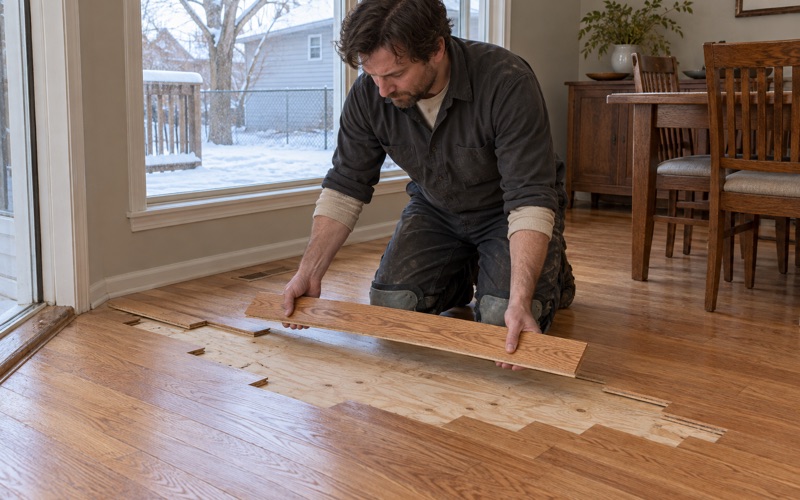
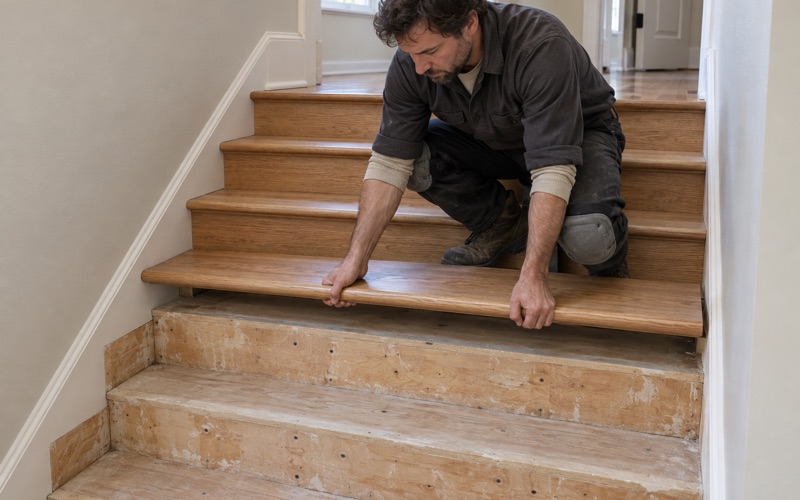
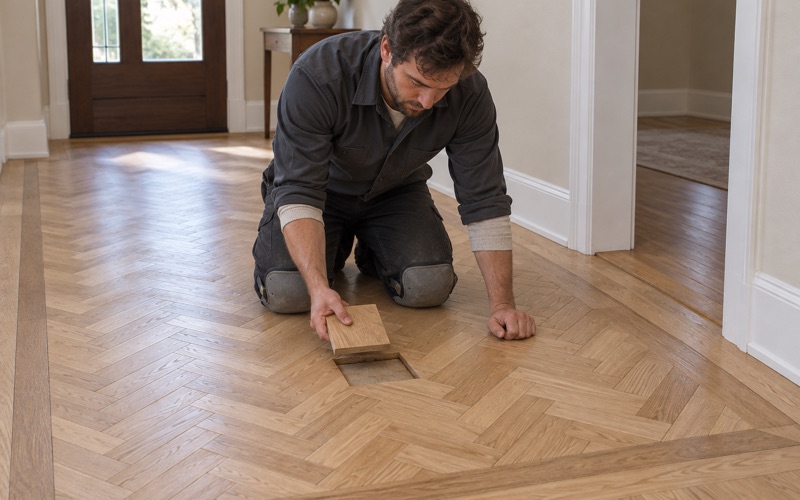
Older floors usually need wood before they need sanding. A damaged run gets a weave-in, so replacement boards interlock with the existing courses instead of sitting in an obvious rectangle, and a small localized problem gets a dutchman patch cut to fit the opening.
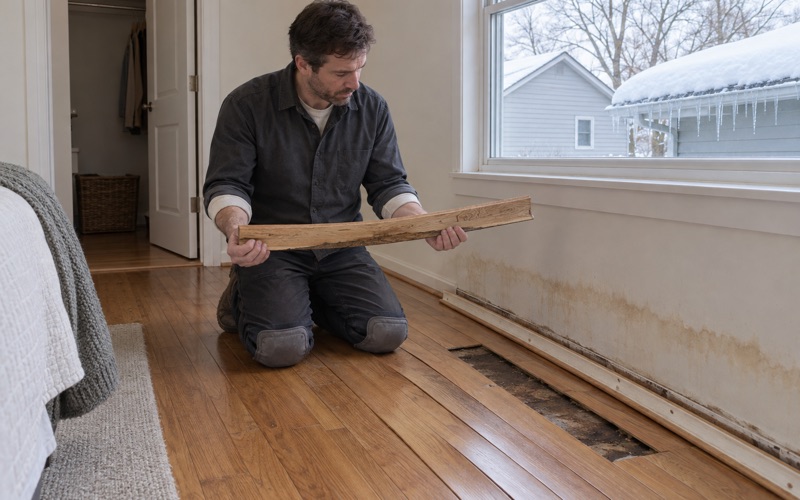
Narrow older strip, sometimes quartersawn, does not always match what suppliers stock today, so sourcing the material is part of the schedule rather than an afterthought. Where water has been involved, we photograph and document the damage before anything is pulled up, because a claim that turns on like kind and quality is easier to settle with a record of what was actually on the floor.
Whichever half of the city a floor sits in, the crew that measures it is the crew that finishes it. The person who took the humidity reading in February is the one deciding whether the floor is ready for its final coat in March, and that call is easier to get right when it is not being handed between people.
- 20+ Years Experience
- Free Written Estimates
- Dust Containment on Every Sand